Showing posts with label Film Reviews. Show all posts

Monday, 23 January 2012

Narrative - Behind the Mask: The Rise of Leslie Vernon (2006)

Behind the Mask: The Rise of Leslie Vernon
Fig 1.

Behind the Mask: The Rise of Leslie Vernon (2006) Director - Scott Glosserman


In a fiction where 'A Nightmare On Elm Street' (1984), 'Halloween' (1978) and 'Friday The 13th' (1980) were real life serial killers that meticulously planned out their killing spree to give the impression of a supernatural force, Leslie Vernon will be the next instalment in the serial killer series. In a narcissistic twist Vernon has enlisted the help of a crew of journalists to document a 'making of' for his planned rampage. But when it comes to the crunch the crew find they are unable to let Vernon go through with it, but what they don't realise is that he has taken that into consideration.


Fig 2.
 
'Behind The Mask' is a clever way of reinventing a genre that has exhausted every possibility, giving it a fresh perspective and turning the stereotypes up-side-down. Althought it could be argued that the idea was much more interesting than what the makers had executed.
 
 
Fig 3.


Image Bibliography

Fig 1 . Behind the Mask: The Rise of Leslie Vernon, DVD Cover 2006, [photography] http://content6.flixster.com/movie/33/48/96/3348960_det.jpg
 
Fig 2 . Behind the Mask: The Rise of Leslie Vernon, Movie Still, 2006, [photography] http://t1.gstatic.com/images?q=tbn:ANd9GcRq4u_3-gght_JbA6J3CFx6n1epD4vXHlLCXn-hrCg8itqucR-ie4ZL6SxUIg

Fig 3 . Behind the Mask: The Rise of Leslie Vernon, Movie Still, 2006, [photography] http://www.movielogy.com/iwanproperties/moviestillfiles/behind-the-mask-1c.jpg

Narrative - The Exorcist (1973)

The Exorcist
Fig 1.

The Exorcist (1973) Director - William Friedkin


Regan is a 12 year old girl living with her Mother in Washington, when she starts developing unusual symptoms she is taken to various doctors for medical help. After many physical and psychological tests are taken and all possibilities are ruled out the Mother considers exorcism. Battle ensues between two priests and the demon within Regan who is unwilling to let go of her body. Regan herself unawares of what has happened to her and taken over by evil has sunk back into the subconsciousness of her mind leaving the demon to speak for her in a manner not even acceptable to the most despicable of humans.


Fig 2.

Described as "vile and brutalizing." (Time Magazine, 1974) The films plays a game of psychological horror with any empathetic viewer that is able to endue the torture of a young innocent girl and is described as "practically impossible film to sit through, but not necessarily because it treats diabolism with the kind of dumb piety moviemakers once lavished on the stories of saints....It establishes a new low for grotesque special effects" (The New York Times, 1974) This is a film not for the faint hearted.


Fig 3.
Trailer


Bibliography

The Exorcist, Time Magazine, 1974, [Online] http://www.time.com/time/magazine/article/0,9171,908384,00.html [Accessed 23 January 2012]

The Exorcist, The New York Times, 1974, [Online] available at http://movies.nytimes.com/movie/review?_r=1&res=EE05E7DF1738E466BC4F51DFB4678388669EDE&oref=slogin [Accessed 23 January 2012]

Image Bibliography

Fig 1 . The Exorcist, DVD Cover 1973, [photography] http://content9.flixster.com/movie/28/02/280219_det.jpg
Fig 2 . The Exorcist, Movie Still, 1973, [photography] http://listverse.files.wordpress.com/2009/10/19831__exorcist_l.jpg

Fig 3 . The Exorcist, Movie Still, 1973, [photography] http://t1.gstatic.com/images?q=tbn:ANd9GcQEuZhNISwoYgqowYvUjKKxOtIBOmotMzte-nTpxlHYckUMAxDHjOqpmSMS

Narrative - Who Framed Roger Rabbit (1988)

Fig 1.


Who Framed Roger Rabbit (1988) Director - Robert Zemeckis


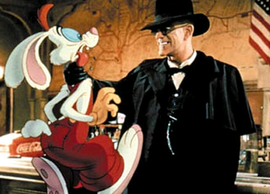
Eddie Valiant (Bob Hoskins) is private detective been hired to snoop on Jessica Rabbit, the cartoon wife of Roger Rabbit who reside in L.A. where cartoon intermingle with real people. Valiant soon finds himself muddled in conspiracy, blackmail and murder whist trying to clear the name of the suspect Roger Rabbit in a 40' film noir. The use of live actors and cartoon characters wasn't new back in the 80's but this would be the first time it was used so extensively. To get 2D characters to interact with live action was no easy task. Today actors are well used to speaking to characters that are not on the set but back in 1988 it was something less common, and in 'Who Framed Roger Rabbit' the cast didn't seemed at all fazed by this. "Visually stunning and creatively superior, Zemeckis's work is frequently staggering and always entertaining." (BBC, 2001) The acting and the skilled post production helped give the cartoon characters much realism as entities. "The first blend of animation and live-action that seemed so natural we felt the characters were real." (Empire, Unknown date) All the popping eye candy effects, interlaced with an intelligent plot, cartoon comedy that effects both penned and live actors makes 'Roger Rabbit' a timeless masterpiece of film noir not just for the young folk but for the adults alike.

Fig 2.


Trailer


Bibliography

Who Framed Roger Rabbit, Empire, Unknown date, [Online] http://www.empireonline.com/reviews/review.asp?FID=133281 [Accessed 23 January 2012]

Who Framed Roger Rabbit, BBC, 1988, [Online] available at http://www.bbc.co.uk/films/2001/04/11/who_framed_roger_rabbit_1988_review.shtml [Accessed 23 January 2012]

Image Bibliography

Fig 1 . Who Framed Roger Rabbit, DVD Cover 1988, [photography]
http://content9.flixster.com/movie/11/15/55/11155547_det.jpg

Fig 2 . Who Framed Roger Rabbit, Movie Still, 1988, [photography] http://upload.wikimedia.org/wikipedia/en/thumb/7/77/Judgedoom.PNG/270px-Judgedoom.PNG

Fig 3 . Who Framed Roger Rabbit, Movie Still, 1988, [photography] http://www.best-horror-movies.com/image-files/freaks-torso-man.jpg

Narrative - Tom Browning's Freaks (1932)

Fig 1.


Tod Browning's Freaks (1932) Director - Tod Browning


'Freaks' revolves around the participants of a travelling circus. When a beautiful trapeze artist marries a midget for his money and tries to kill him so she can live with her strongman lover, the 'freaks' in the circus at finding out her wicked plot seek revenge. As a film you would think it would feel exploitative of the actors but "Browning's treatment is never voyeuristic or condescending, but sympathetic in such a way that after a few minutes we almost cease to perceive them as in any way abnormal." (Timeout, Unknown date)  In today's more forgiving world for people with a disability you could see this film never being made today, not because of the treatment of the actors but due to political correctness gone made.


Fig 2.

As for the the performance of the actors it carries a genuine feel of unity between the cast as the 'freaks' who in this horror movie turn out as the protagonists and the beautiful trapeze artist in reality is the evil antagonist. This all adds up to making a compelling story as the actrs are real 'freaks'. "As nothing here is faked or dreamt up by some special effects department, Browning forces us to reassess our assumptions of the normal and abnormal." (BBC, 2002) There is a lesson to be learned (but if you haven't learnt it already by now you probably need help) in that one should never judge a person from the outside. Just because someone appears beautiful on the outside it doesn't mean there is beauty found within and visa versa.


Fig 3.

Trailer


Bibliography

Freaks, The New York Times, Unknown date, [Online] http://www.timeout.com/film/reviews/67032/freaks.html [Accessed 23 January 2012]

Freaks, BBC2001, [Online] available at http://www.bbc.co.uk/films/2002/09/11/freaks_1932_review.shtml [Accessed 23 January 2012]

Image Bibliography

Fig 1 . Freaks, Poster, 1932, [photography]
http://ia.mediaimdb.com/images/M/MV5BMTMyMzkyNDg5Ml5BMl5BanBnXkFtZTcwODk3MDk0Mg@@._V1._SY317_CR4,0,214,317_.jpg

Fig 2 . Freaks, Movie Still, 1932, [photography] http://media.avclub.com/images/articles/article/39601/freaks_M_jpg_627x325_crop_upscale_q85.jpg

Fig 3 . Freaks, Movie Still, 1932, [photography] http://www.best-horror-movies.com/image-files/freaks-torso-man.jpg

Narratvie - Blade Runner (1982) (The Final Cut 2007)

Fig 1.


Blade Runner (1982) (The Final Cut 2007) Director - Ridley Scott


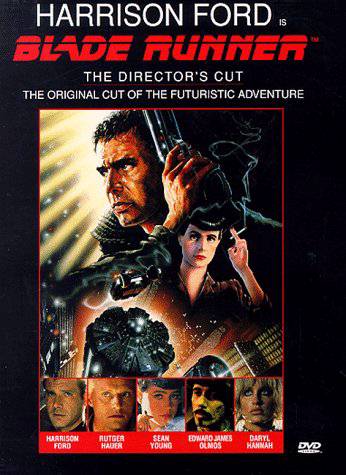
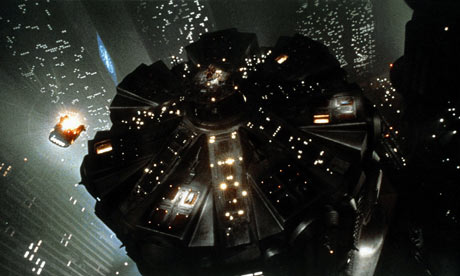
In the future, Rick Deckard (Harrison Ford) an ex-cop is brought out retirement in the dystopian mega city of Los Angeles to assassinate four runaway replicants (artificial humans used as slave labour on other worlds that are illegal on Earth). For a film originally concieved in 1982 the visual effects of the city scape still look beautifully constructed even by todays standards (albeit some digital makeup has been added) and the mix of the old technology still there from the 80's doesn't detract from the seemingly real future it perdicts. The tale is told in a classic film noir detective style so mixing the genres of sci-fi and film noir to create a tech-noir world that is candy to the eyes. Not to mention the provoking musically score it has been described as "a stunning shot of this futuristic city, accompanied by the rumbling of Vangelis's eerie" (The New Your Times, 1982)


Fig 2.

The film is most noted for it's use of only night-time shots, rain, lighting that creates both the classic mood of film noir and aiding to create the feel of bleak dystonpian future in which the viewer if transported. 'Blade Runner' "fully and richly deserves its reputation. It is simply one of the most extraordinary films ever made." (BBC, 2001) With the added rework of the print being digitally re-worked 'The Final Cut' seems to be what it says on the tin. It's the most definative version (although some of the changes you may miss) and should never be re-worked again.


Fig 3.

Trailer


Bibliography

Blade Runner, The New York Times, 1982, [Online] available at http://movies.nytimes.com/movie/review?res=9A0DE4D71038F936A15755C0A964948260&partner=Rotten  [Accessed 23 January 2012]

Blade Runner, BBC2001, [Online] available at http://www.bbc.co.uk/films/2001/02/07/blade_runner_1982_review.shtml [Accessed 23 January 2012]


Image Bibliography

Fig 1 . Blade Runner, DVD cover, 2007, [photography]
http://www.thealmightyguru.com/Reviews/BladeRunner/Images/BladeRunner-DVD-DirectorsCut.jpg
Fig 2 . Blade Runner, Movie Still, 1982, [photography] http://static.guim.co.uk/sys-images/Arts/Arts_/Pictures/2009/11/5/1257432294732/The-futuristic-police-sta-001.jpg

Fig 3 . Blade Runner, Movie Still, 1982, [photography] https://blogger.googleusercontent.com/img/b/R29vZ2xl/AVvXsEgEpgJ7lpp_O3GwQeunsFZ5ALDzwRLiB6VjdO-N5297ehyynic3sasHCv5LcOnfohDTtQgN_tLobRZqTdcjRs3MxcGgW1uP7FCREafYk6vvzXmCZdGamPn_LYtZ9Gk4opAJeQp44dz7faY/s1600/bladerunner460.jpg

Narrative - Mars Attacks (1996)

Fig  1.


Mars Attacks (1996) Director - Tim Burton


Humankind need no longer wonder if they are the only intelligent life in the Galaxy when visitors from the planet Mars come with the intent on taking over the world, culminating in a comical battle between unlikely heroes including Tom Jones as himself and a rude gambler (Danny Devito). Eventually the invaders with superior intellect and technology are vanquished by a luscious and unlikely 'weapon' the insures the safely of the human race for another day.


Fig 2.

 Mars attacks play homage to sci-fi movies of the 50's in its style and content spoofing the ideas and visual effect that spawned the classics. 50's style ray guns and flying saucers "a splenetic satire which gleefully trashes contemporary culture" (Timeout. 1996) The Martians themselves steal the show and the film is, "partly redeemed by a number of hilarious and gruesome alien invasion skits." (BBC, 1996) Although the CG isn't the most convincing they air a style and character that makes them a comical foe that would make any Earthling want to rise to the challenge. If they were more formidable   If you are looking to get away from the modern day Tim Burton narrative 'Mars Attacks' fits the bill.


Fig 3.

Trailer


Bibliography

Mars Attacks, BBC1996, [Online] available at http://www.bbc.co.uk/films/2001/06/21/mars_attacks_1996_review.shtml   [Accessed 23 January 2012]

Mars Attacks, Timeout1996, [Online] available at http://www.timeout.com/film/reviews/72879/mars_attacks.html [Accessed 23 January 2012]


Image Bibliography

Fig 1 . Mars Attacks, DVD cover, 1996, [photography]
http://www.starwarped.net/files/other-roles/Natalie-Portman/Mars-Attacks-dvd-cover.jpg

Fig 2 . Mars Attacks, Movie Still, 1996, [photography] http://membres.multimania.fr/starmars/psp/lisa51.jpg

Fig 3 . Mars Attacks, Movie Still, 1996, [photography] http://www-movieline-com.vimg.net/wp-content/uploads/2011/12/marsattacksfireee500.jpg

Narrative - District 9

Fig 1.


District 9 (2009) Director: Neill Blomkamp


A gigantic malfunctioning space craft hovers over Johannesburg, South Africa. After it being there for sometime the authorities decide that it's time to investigate inside, and what they find are a hoard of aliens inside. Unable to leave Earth the aliens are house in a Township as refugees where they are left suffer the indecencies of poverty. The human population of Johannesburg start to get weary of their alien neighbours and an eviction notice starts to be served to the 2.5 million alien refugees to relocate them further away. Wikus Van De Merwe (Sharlto Copley) and employee of MNU (the private company to relocate the aliens) is head of the the operation is more interested in acquiring the aliens weapons technology for MNU and a bazaar twist of fate ends up helping the aliens for his own sake.


Fig 2.


The most striking way in which the story is told is how much it paralleled South Africa in the times of Apartheid. It's no coincidence that the makers of the film made it this way. They could have easily made the ship hover over New York or London, but would the story have been as poignant? No, not a chance. There is a real hatred of the aliens or "prawns" as they are referred to, which causes them to be segregated into the lowest living conditions much the same as the black community during aparthied were houses into townships that still exist today, "picking at the scab of apartheid in ways that must be akin to a battery-acid shower back home." (Timeout, 2009) It must have been hit home much harder to a South African audience.


Fig 3.


Bibliography

District 9, Timeout2009, [Online] available at http://www.timeout.com/film/chicago/reviews/87388/district_9.html [Accessed 28 September 2011]


Image Bibliography

Fig 1 . District 9, DVD cover, 2009, [photography] http://ia.media-imdb.com/images/M/MV5BMTM4OTI1OTM5NF5BMl5BanBnXkFtZTcwMzk5MTU1Mg@@._V1._SY317_CR0,0,214,317_.jpg

Fig 2 . District 9, Movie Still, 2009, [photography] http://3.bp.blogspot.com/_Qawn60e4es/TREPEVR0DTI/AAAAAAAABFE/Sv6cXMhB7Sc/s1600/district-9-2.jpg

Fig 3 . District 9, Movie Still, 2009, [photography] http://cinesnark.files.wordpress.com/2010/06/district-9-sharlto-copley.jpg


Wednesday, 19 October 2011

Postmodernism - Moulin Rouge


Fig 1.

Moulin Rouge (2001) Director: Baz Luhrmann.


In the late 1890's Christian (Ewan McGregor) is a writer leaves his home in London for seedy Montmartre, Paris to find his inspiration and discover a bohemian lifestyle and love. While there, due to a mistaken identity Christian finds himself falling in love with the courtesan Satine (Nicole Kidman). Although the love is mutual, their love affair is doomed from the start as Satine's future as an actress depends on her marrying The Duke (Richard Roxburgh).


Fig 2.

As a narrative 'Moulin Rouge' offers nothing new. It's the same story that's been recycled since Shakespears 'Romeo and Juliet', young couple fall in love and can't be together. Although this is the case the love story is still absorbing and makes you genuinly feel for the characters. What really sets 'Moulin Rouge' apart from the average love story is its postmodern twist, "post-modern mix of myth, musical, comedy, romance and unfettered pastiche" (Time Out, 2001) Throught the film the audience is delivered a montage of pop melodies from Nirvana to Madonna that have no tie to the time period of the film. In addition to music (which adds a huge comedy element) the editing it like something out of a cartoon and only makes for more comedy enjoyment. "Add flashy editing, lush production design and spectacular dance routines and the result is something akin to an extended music video" (BBC, 2001) Without these postmodern twists 'Moulin Rouge ' would have been a flat, dull, done to death story, but as it is, it's fun, it's ecstatic, and one of the most absorbing films I've seen.


Fig 3.


Trailer


Bibliography

Moulin Rouge, BBC2001, [Online] avaliable at http://www.bbc.co.uk/films/2001/06/22/moulin_rouge_2001_review.shtml   [Accessed 19 October 2011]

Moulin Rouge, Timeout2001, [Online] avaliable at http://www.timeout.com/film/reviews/73566/moulin_rouge.html [Accessed 19 October 2011]


Image Bibliography

Fig 1 . Moulin Rouge, DVD cover, 2001, [photography] http://cinephile.files.wordpress.com/2009/01/moulin-rouge.jpg?w=301&h=450

Fig 2 . Moulin Rouge, Movie Still, 2001, [photography] http://feedthebutton.com/wp-content/uploads/2011/02/moulin.jpg

Fig 3 . Moulin Rouge, Movie Still, 2001, [photography] http://images.picturesdepot.com/photo/m/moulin_rouge_movie-207798.jpg

Wednesday, 12 October 2011

Narrative - Spine Tingler! The William Castle Story

Fig 1.

Spine Tingler! The William Castle Story (2007) Directer: Jeffery Schwarz


Castle was a director and producer of low budget B-movies, but he felt that just watching the film wasn't enough. Castle was best known for conjuring up various gimmicks to put in his films to attract an audience and to create a greater amount of shock. "Castle's homegrown genius lay in knowing that the movies weren't enough" (Variety, 2007)  The gimmicks started with his film 'Macabre' (1958) where he offered $1000 life insurance to anyone who died of fright in the theatre and nurses were standing by just in case, as well as to add more tension. Castle's gimmick got him an audience and from then on he would dream a new gimmick for every new film. ".....the movies he made aren't always as well remembered as the way he sold them to the public" (The New York Times, 2007) Film after film Castle pulled in his audience, but this was not due to the films narrative, it was more the gimmick that accompanied it.


Fig 2.


Although Castle never made it as an A-movie director, his involvement as producer of 'Rosemary's Baby' (1968) earned him a great amount of credibility amounst his peers. Castle stood aside as director on 'Rosemary's Baby'  for Roman Polanski even though he had a huge desire to direct the movie. Overall 'Spine Tingler! The William Castle Story' (although fast passed) is a fun look at a director that was full of life but never quite made the A-movie he would like to have. He did though do everything in his power to have fun and entertain.


Fig 3.

Trailer


Bibliography

Spine Tingler! The Willaim Castle Story, Variety, 2007, [Online] avaliable at http://www.variety.com/review/VE1117935479?refcatid=31 [Accessed 11 October 2011]

Spine Tingler! The Willaim Castle Story, The New York Times, 2007, [Online] avaliable at http://movies.nytimes.com/movie/422962/Spine-Tingler-The-William-Castle-Story/overview?ex=1202533200&en=02a1f18a02d640f8&ei=5070&emc=eta1 [Accessed 11 October 2011]


Image Bibliography

Fig 1 . Spine Tingler! The Willaim Castle Story, DVD cover, 2007, [photography] http://media.screened.com/uploads/0/12/16021-spine-tingler-the-william-castle-story_large.jpg

Fig 2 . Spine Tingler! The Willaim Castle Story, Movie Still, 2007, [photography] http://www.joblo.com/images_arrownews/williamcastle.jpg

Fig 3 . Spine Tingler! The Willaim Castle Story, Movie Still, 2007, [photography] http://www.filmcritic.com/features/assets_c/2010/04/tingler-thumb-560xauto-28937.jpg

Monday, 10 October 2011

Postmoderism - Mulholland Drive

Fig 1.


Mulholland Drive (2001) Director - David Lynch


For anyone that knows Lynch (Twin Peaks, Erasorhead) there will be no surprise that Mulholland Drive doesn't make much sense. It all starts off by giving a false sense of understanding that soon ends up in confusion. Rita (Laura Harring) is the target of a hit gone wrong when the car she occupies is involved in an accident that kills her wouldbe killer and leaves her with no memory. She enters into the life of Betti Elms (Naomi Watts) and together they attempt to piece together who Rita really is. "That sounds like a movie. Sort of. But Lynch's subplots seem to be running in tandem with a different, non-existent story line."  (CNN, 2001) The film swerves from scene to scene that appear to have no connection at all, taking the narrative away from the traditional and into the unconventional.


Fig 2.

There is an impression that, at some point, the film will have some closure, a closure which never happens. All the setting up of the interwoven plots, that give an impression that there will be a climax you never would have never guessed, turn into deadends. "That is, until it suddenly and stupidly decides to switch characters' identities" (Time Out, 2001) You are then cemented with the idea, that somehow nothing will become clearer and you're left feeling frustrated and emply at all the loose ends.


Fig 3.


Trailer


Bibliography

Mulholland Drive, CNN, 2001, [Online] avaliable at http://edition.cnn.com/2001/SHOWBIZ/Movies/10/12/review.mulholland.drive/ [Accessed 10 October 2011]

Mulholland Drive, Time Out, 2001, [Online] avaliable at http://www.timeout.com/film/reviews/73603/mulholland_dr.html  [Accessed 10 October 2011]

Image Bibliography

Fig 1 . Mulholland Drive, DVD cover, 2001, [photography] http://ia.media-imdb.com/images/M/MV5BMTMwMTY0Nzk3M15BMl5BanBnXkFtZTcwMjQwMTMzMQ@@._V1._SY317_CR4,0,214,317_.jpg

Fig 2 . Mulholland Drive, Movie Still, 2001, [photography] http://www.moviemail-online.co.uk/images/large/mulholland1.jpg

Fig 3 . Mulholland Drive, Movie Still, 2001, [photography] http://missprescottpresents.files.wordpress.com/2011/05/naomi_mulholland-drive.jpg

Narrative - Best Worst Movie.

Fig 1.


Best Worst Movie (2009) - Director: Michael Stephenson.


The 'Best Worst Movie' is a documentary about the cult phenomenon that surrounds the film 'Troll 2' (1990) director: Claudio Fragasso. Michael Stephenson, child star of Troll 2 "Tries to pin down the alchemy that transports a film from reject bin to cult favorite" (New York Times, 2010). Troll 2 as a film was a disarster, plumeting to a new level of b-movie awefulness that ashamed the actors involved to the point of denial. Little would they know that over the years an audience would warm to the film to the point where actors would come out of hiding and soak up their new found stardom.


Fig 2.

Michael Stephenson riding on the crest of the wave of this new phenomenon meets with the other actors, and goes to film showings full of fans. Even 'Troll 2' director Claudio Fragasso is there to soak up the glory. Unfortunately for Fragasso the reason people love this film so much is because it's bad, not because all of a sudden its been seen in a new light of genius. Due to this the new appreciation the film gets is a disappointment to Fragasso, it can be clearly seen that he feels insulted particularly when the audience "Laugh when they are not supposed to." (Claudio Fragasso). Over all 'Best Worst Movie' is a happy ending about an ugly moster that's realised that people love him and is no longer afraid to show its face.
'

Fig 3.


Trailer


Bibliography

Best Worst Movie, New York Times, 2009, [Online] avaliable at http://www.nytimes.com/2010/05/13/movies/13worst.html?scp=1&sq=best%20worst%20movie&st=cse [Accessed 5 October 2011]

Best Worst Movie, 2003. [DVD] Michael Stephenson, USA: Magic Stone Productions.


Image Bibliography

Fig 1 . Best Worst Movie, DVD cover, 2009, [photography] http://t3.gstatic.com/images?q=tbn:ANd9GcRunDwQahPRsvVfzlnbGE0ZAFYkeSu6Mb1Zc7_z7ZyXFx9OUMpOTG2C1GXA

Fig 2 . Troll 2, Movie Still, 1990, [photography] http://mos.totalfilm.com/images/f/frightfest-2009-best-worst-movie-review-03-420-75.jpg

Fig 3 . Troll 2, Movie Still, 1990, [photography] http://www.fearnet.com/fearnetImages/imsTjAk4lBVvtHOKecji3r7Q==.jpg

Wednesday, 28 September 2011

Narrative - Lost In La Mancha

Fig. 1


Lost In La Mancha (2002) - Directors: Keith Fulton,  Louis Pepe.


An in-depth, voyeuristic look at how all the ingredients to make something good can still manage to go bad. Terry Gilliam’s 'The Man Who Killed Don Quixote' never hit the cutting room; the film was abandoned weeks into production due to 'Force Majeure'. What did make the cutting room was the footage documenting the unfortunate lake of production.


Fig 2.


When watching a film there's always a desire for the viewer to want to see something succeed, a protagonist that battles the odds and wins. When watching a real life documentary that desire is still there but often doesn't get quenched. During the documented production of 'The Man Who Killed Don Quixote' Gilliam was our protagonist, he battled the odds trying to make a film that he had planned for many years. Gilliam had set back after set back to cope with, but his tenacity was still so strong, the BBC elaborate "Gilliam, whose enthusiasm and imagination keep the shoot going long after it seems impossible to continue." It was heart breaking to see him defeated time and again.


Fig 3.

Late acters, an ill lead actor, severe weather problems, and a sound stage with bad acoustics all contribute to the demise of Gilliam’s project. What little footage that was shot is a rare glimpse of what could have been. It could be difficult to really see how the film would have been, but you can’t help but wonder. Time Out conclude “One may not get a clear idea of how the film would have turned out, but there's certainly poignancy to seeing these brief fragments of a shattered dream.” A shattered dream that should have another chance.

Trailer


Bibliography

Lost In La Mancha, BBC, 2002, [Online] avaliable at http://www.bbc.co.uk/films/2002/07/24/lost_in_la_mancha_2002_review.shtml   [Accessed 27 September 2011]

Lost In La Mancha, Timeout, 2002, [Online] avaliable at http://www.timeout.com/film/reviews/80727/lost_in_la_mancha.html [Accessed 27 September 2011]


Image Bibliography

Fig 1 . Lost In La Mancha, DVD cover, 2002, [photography] http://www.smart.co.uk/lostinlamancha/media/usposter.jpg

Fig 2 . Lost In La Mancha, Still, 2002, [photography] http://thecia.com.au/reviews/l/images/lost-in-la-mancha-6.jpg

Fig 3 . Lost In La Mancha, Still, 2002, [photography] http://thecia.com.au/reviews/l/images/lost-in-la-mancha-6.jpg

Tuesday, 20 September 2011

Narrative - Ed Wood


 Fig 1.

Ed Wood (1994) - Director, Tim Burton.


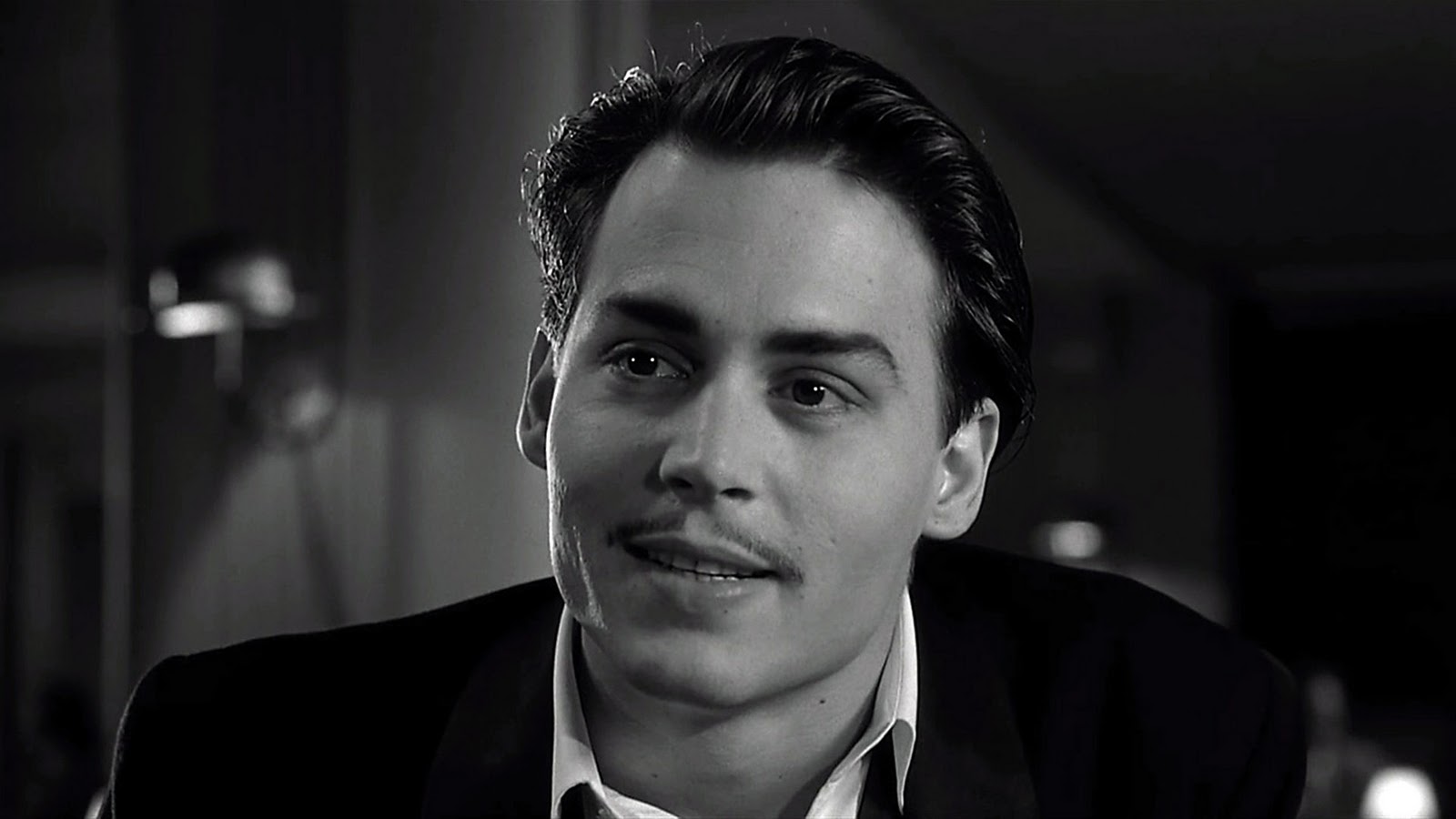
Ed Wood is a tale based on the struggle of the infamous film director Ed Wood (Johnny Depp) and ultimately the creation of  'Plan 9 From Outer Space' which clinched him the title of worse film maker in movie history. Ed Wood’s film making career was thwart with funding issues causing low budgets and poor production and no matter how determined and sincere in his efforts the results were received badly by audiences and his peers. Ultimately Wood’s career never blossomed and he sank into making porn films and at the age of 58 died of a heart attack possibly aided by his serious drinking problem.


Fig 2.

Shot in black and white and with the sets and scenes of some of Wood’s film painstakingly recreated there was an amazing amount of authenticity. The New York Times further explains that Ed Wood “pays homage with loving re-enactments of authentic Wood movie scenes and with actors who look uncannily like members of Wood's freakish troupe.” All of which is a triumph in film making for Burton in that he manages to recreate something that’s so bad you really couldn’t make it up.


 Fig 3.

Burton ends the film at the part of Wood’s life at the world premier of ‘Plan 9 From Outer Space’ where Wood states “This will be the film I’ll be remembered for.” It’s a perfect ending for the film and because you don’t see the lows of his later life it manages to beautifully portray Ed Wood, the known failure into a lovable eccentric that makes you wish he could some how succeed in his plan to create movies by any means possible.


Trailer


Bibliography

Ed Wood, New York Times, 1994, [Online] avaliable at http://movies.nytimes.com/movie/review?res=9405E0DA143AF930A1575AC0A962958260&scp=4&sq=ed%20wood&st=cse [Accessed 20 September 2011]

Ed Wood, Timeout, 1994, [Online] avaliable at http://www.timeout.com/film/reviews/63724/ed_wood.html [Accessed 20 September 2011]


Image Bibliography

Fig 1 . Ed Wood, DVD cover, 1994, [photography] http://www.emovieposter.com/images/sunday/200/ed_wood_JC00133_L.jpg

Fig 2. Ed Wood, Movie Still, 1994, [photography] http://cynicritics.files.wordpress.com/2011/05/ed-wood.jpeg

Fig 3. Ed Wood, Movie Still, 1994, [photography] http://www.jonathanrosenbaum.com/wp-content/uploads/2011/03/edwood1.jpg